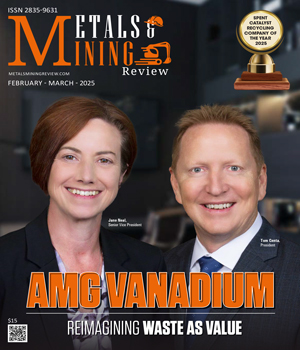
Metals And Mining Review

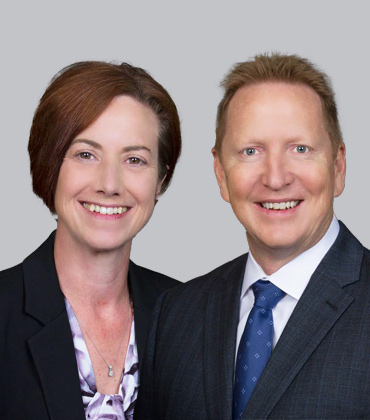 Jane Neal, Senior Vice President & Tom Centa, President
AMG Vanadium is a wholly owned subsidiary of AMG Critical Materials N.V. (AMS: AMG). AMG's mission is to provide critical materials and related process technologies to advance a less carbon-intensive world. AMG Vanadium has spent over two decades perfecting the art of recycling. This continuous effort—centered on transforming spent catalysts into valuable metals—has created a distinctive approach where sustainability and innovation align harmoniously.
At the core of AMG Vanadium’s success is its proprietary V-CYCLE™ roasting and pyrometallurgical process, a state-of-the-art method that shatters traditional environmental compliance benchmarks. This process enables the company to achieve a remarkable 99 percent conversion of hazardous waste into saleable finished goods while eliminating process wastewater, reclaiming valuable metals and reducing CO2 emissions by 80 percent. These achievements have positioned AMG Vanadium as the industry’s benchmark, being the most environmentally compliant operation.
“With no process wastewater and low CO2 emissions, we uphold our promise to protect the environment while delivering value to our refinery partners,” says Jane Neal, Senior Vice President of AMG Vanadium.
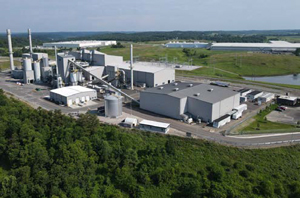 AMG Vanadium recently doubled its operating capacity to lead the industry in scale and operational efficiency. This expansion exemplifies its mission to drive the circular green economy while delivering measurable environmental benefits.
“When considering the scale of waste diverted from landfills, the impact becomes clear—AMG is driving meaningful change on a global scale,” says Tom Centa, President of AMG Vanadium, emphasizing the transformative impact of the company’s operations.
A Vision for a Sustainable Industrial Future
From its advanced facilities in Cambridge and its expansion in nearby Zanesville, Ohio, AMG Vanadium has achieved a significant milestone—it has become the world’s largest recycler of spent catalysts. Yet the company’s reach extends well beyond raw capacity, as it consistently produces high-value products that match the evolving demands of modern industry.
Leading this portfolio is “Green Vanadium,” branded FEROVAN®, a low-aluminum ferrovanadium alloy that exemplifies AMG Vanadium’s pursuit of sustainability and efficiency. With a carbon footprint 80 percent lower than vanadium obtained through traditional mining, FEROVAN® offers steelmakers a remarkable blend of environmental responsibility and economic prudence. FEROVAN® optimizes vanadium recovery while maintaining cost efficiency—delivering an unmatched solution for the steel industry.
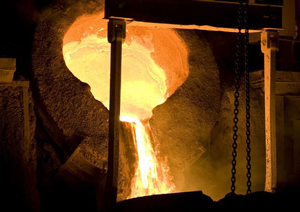 Equally noteworthy is FeNiMoly®, a ferronickel-molybdenum alloy tailored for specialized alloy production. This precise mix of nickel and molybdenum is in high demand within the stainless steel sector, where it is widely used as a scrap alternative or in the creation of high-alloy carbon steel. By delivering consistent quality and versatility, FeNiMoly® solidifies AMG Vanadium’s role as a trusted partner for modern metallurgy.
Beyond alloys, AMG Vanadium’s LimeAdd™ (FGD gypsum) is transforming waste management. This versatile solidification agent stabilizes semi-liquid wastes like drilling muds and cuttings, making disposal simpler and more efficient. Meanwhile, Revan™, AMG Vanadium’s calcium-aluminate product, is making waves in ladle metallurgy. Crucial for synthetic slag applications, Revan™ allows steelmakers to achieve greater accuracy and consistency in their production processes.
AMG Vanadium’s pioneering spirit knows no borders. Its sister facility in Germany is making significant strides by producing high-purity vanadium pentoxide. This specialized material is engineered to meet the stringent standards required in titanium production, a sector vital to aerospace and defense. By advancing these initiatives on a global stage, the company reinforces its commitment to ongoing innovation.
The evolution of environmental regulations, such as the International Maritime Organization's (IMO) stricter sulfur emission limits, has intensified the demand for AMG Vanadium’s services. These regulations have driven a global need to upgrade high-sulfur crude into higher-value products, creating opportunities for the company to expand its impact.
Equally pivotal to AMG Vanadium’s mission is its focus on vanadium, a strategic material essential to defense and infrastructure. As the largest North American producer of ferrovanadium, the company ensures a steady domestic supply, reducing dependence on imports and reinforcing economic stability. By aligning its operations with national security needs, AMG Vanadium solidifies its role as a critical partner for government and industry alike.
AMG’s German operations are also taking bold steps into the fast-growing energy storage market with nearly infinite-lifespan vanadium electrolytes for flow batteries. This development marks AMG’s strategic expansion into energy storage, a sector of growing importance as the world transitions to renewable energy solutions, reflecting a future-forward focus that resonates with worldwide sustainability efforts.
“Our product diversification highlights our ability to recycle and innovate while ensuring that nearly all processed materials contribute to high-value applications across various industries,” adds Jane Neal.
Doubling Down on Capacity to Lead the Global Recycling Movement
With no process wastewater and low CO2 emissions, we uphold our promise to protect the environment while delivering value to our refinery partners
The evolution of environmental regulations, such as the International Maritime Organization's (IMO) stricter sulfur emission limits, has intensified the demand for AMG Vanadium’s services. These regulations have driven a global need to upgrade high-sulfur crude into higher-value products, creating opportunities for the company to expand its impact.
Recognizing this shift, AMG Vanadium commissioned its $300 million Zanesville facility in 2022, doubling its recycling capacity and thereby increasing the environmental benefits of the company’s operations. Over $100 million of this funding has been dedicated to state-of-the-art emission control equipment, underscoring the company’s long-term commitment to sustainability. By increasing its processing and production capacities, AMG Vanadium has solidified its position as the global industry leader, significantly expanding its ability to manage hazardous waste in an environmentally beneficial manner, deliver essential services to refineries worldwide, and provide valuable products to the carbon and stainless steel industries.
AMG Vanadium’s influence has expanded globally through its joint venture with Shell. Shell & AMG Recycling BV (SAR BV) is driving the global adoption of sustainable practices by exporting its patented recycling methodologies to the Middle East and other key regions. Its strategic presence across Europe, the Middle East and Asia has enabled it to make a profound impact on international markets.
Building Trust through Compliance Excellence
Operating under stringent Environmental Protection Agency regulations, AMG Vanadium is regarded to be one of Ohio’s most heavily regulated manufacturers, and it remains committed to operating with transparency and proactive collaboration with governmental entities and all of its business partners. These environmental regulatory relationships played a crucial role while planning and constructing the Zanesville facility, enabling the company to meet and exceed compliance standards. Moreover, AMG Vanadium’s compliance leadership extends internationally, as it skillfully navigates diverse environmental frameworks in the European Union, Middle East and Asia.
-
Our purpose is to make the world a better place. We will continue to invest in our people, processes and technologies that uphold that mission
Equally pivotal to AMG Vanadium’s mission is its focus on vanadium, a strategic material essential to defense and infrastructure. As the largest North American producer of ferrovanadium, the company ensures a steady domestic supply, reducing dependence on imports and reinforcing economic stability. By aligning its operations with national security needs, AMG Vanadium solidifies its role as a critical partner for government and industry alike.
The numbers tell a compelling story of environmental and operational excellence. Since its inception, AMG Vanadium has processed nearly half a million tons of hazardous spent catalysts, recovering over 75 million pounds of vanadium, all while complying with environmental regulations. This recycled vanadium can strengthen steel by up to 40 percent, facilitating the creation of lighter yet sturdier construction materials. As a result, projects ranging from bridges to pipelines and buildings experience significantly reduced carbon emissions, exemplifying AMG Vanadium’s commitment to sustainable innovation.
These meaningful contributions have not gone unrecognized. AMG Vanadium’s pursuit of sustainable solutions and an impeccable regulatory record have earned it accolades, including the Environmental Stewardship Award from Marathon Petroleum—a testament to the company’s dedication to pushing industry boundaries and driving positive change on a global scale.
Leading with Purpose and Innovation
AMG Vanadium’s achievements are driven by its dedicated workforce, which forms the bedrock of its success. Grounded in core values of integrity, respect, safety, value creation and environmental responsibility, it instills a shared vision of operational excellence. This vision is reinforced by comprehensive training programs, ensuring each team member is aligned with AMG Vanadium’s overarching mission.
“Our purpose is to make the world a better place,” says Tom Centa. “We will continue to invest in our people, processes and technologies that uphold that mission.” This commitment drives AMG Vanadium’s growth into new markets and technologies, ensuring that each advancement aligns with its dedication to building a cleaner, more sustainable future for our planet.
Indeed, AMG Vanadium stands for much more than recycling—it epitomizes the drive toward sustainable industrial progress with a far-reaching impact. By blending environmental stewardship with a relentless focus on excellence, the company proves that the circular economy is not just an aspirational concept but a reality in action.
Setting the Standard in Spent Catalyst Recycling
Environmental regulation and refinery modernization have transformed the economics of spent catalyst management. Refiners now operate under tightening sulfur regulations, stricter cross-border waste controls and rising expectations from investors regarding emissions reporting. Spent catalysts, once viewed largely as hazardous residues requiring disposal, are increasingly treated as strategic secondary resources. The shift has reshaped how executives responsible for acquiring spent catalyst recycling solutions evaluate partners.
Regulatory pressure has played a central role in this change. Global fuel standards have driven refineries to expand hydrotreating and desulfurization capacity, increasing the volume of catalyst materials that must be managed safely. Hazard classification further complicates disposal because catalyst residues often contain sulfides, hydrocarbons and heavy metals that create storage and transport risks. Landfilling is no longer a viable long-term strategy for most operators. Cross-border waste restrictions and environmental scrutiny mean refineries require a recycling pathway that permanently neutralizes hazardous characteristics while recovering valuable metals. Responsible conversion of these materials has become an essential part of refinery waste governance rather than a peripheral service.
Technical capability has therefore emerged as a decisive factor in supplier selection. Processing spent catalysts requires metallurgical precision across both pyrometallurgical and hydrometallurgical steps. Feedstocks vary widely in metal composition depending on crude source and refining conditions. An effective recycler must consistently separate vanadium and other alloying elements while managing contaminants and minimizing new waste streams. Industry leaders increasingly demonstrate closed-loop processes that transform residues into commercial alloys or chemicals with high recovery yields. Executives evaluating partners tend to favor processors that can convert nearly all incoming material into usable products, limiting environmental liabilities and maximizing metal recovery.
Environmental performance now sits alongside metallurgical capability as a defining differentiator. Steel producers, battery developers and other downstream customers face their own emissions accounting requirements. A recycling process that produces materially lower carbon emissions than mined metal extraction offers measurable supply-chain benefits. Recycling routes capable of reducing carbon output while reclaiming strategic metals can support the broader decarbonization commitments now embedded in corporate procurement policies. Refiners increasingly expect documentation that verifies these environmental outcomes, including traceable reporting that supports sustainability disclosures.
Scale and long-term continuity have also become essential considerations. Catalyst changeouts occur on defined cycles tied to refinery operations. Interruptions in recycling capacity can expose operators to storage risks or regulatory complications. Buyers often prefer partners that maintain stable infrastructure, technical teams and multi-facility capacity capable of processing diverse residue streams over decades rather than isolated project cycles. Experience in handling complex refinery materials also signals reliability in regulatory compliance, logistics coordination and laboratory verification of metal content.
Against this industry backdrop, AMG Vanadium stands out as a leading provider of spent catalyst recycling solutions. The company applies a proprietary V-CYCLE® roasting and pyrometallurgical recovery process that converts more than 99 percent of vanadium-bearing refinery residues into saleable specialty metals while eliminating the hazardous characteristics of the waste stream. Its facilities transform catalyst residues into alloys such as FEROVAN® ferrovanadium and FeNiMoly®, materials widely used in steel production. The process also generates substantially lower carbon emissions than primary vanadium extraction and removes long-term liability for refinery partners through full metals reclamation.
Industry executives interviewed in the company’s leadership discussion emphasize that the organization’s technology converts refinery waste streams into valuable products while eliminating residual disposal risk, reinforcing its position as a benchmark provider in this field.
For buyers responsible for securing dependable recycling capacity in the refining sector, AMG Vanadium represents a mature and technically proven solution aligned with both regulatory expectations and circular resource strategies.
...Read more
Company
AMG Vanadium
Management
Jane Neal, Senior Vice President & Tom Centa, President
Description
AMG Vanadium specializes in recycling vanadium-bearing waste materials into specialty metals. The firm’s process converts over 99 percent of these waste materials and their primary products are FEROVAN® and FeNiMoly®.